
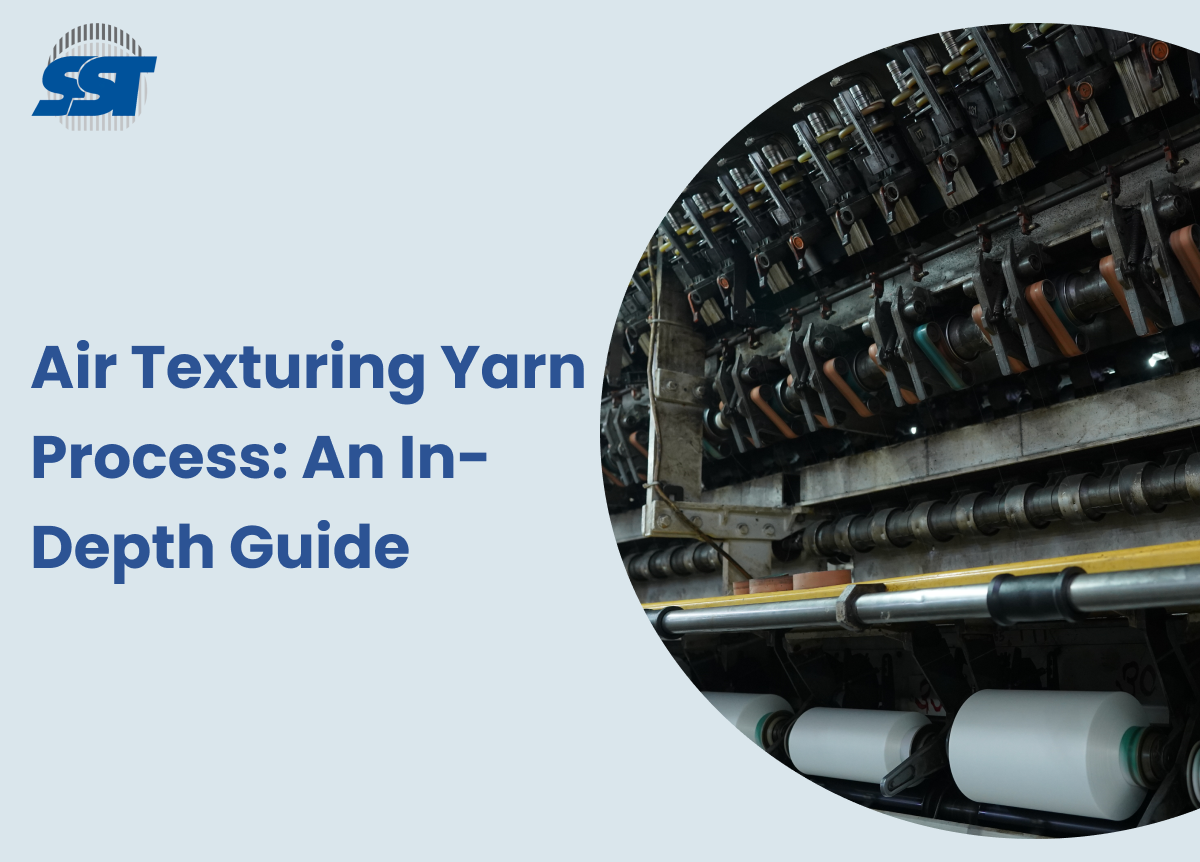
The air texturing yarn process is a widely used technique in the textile industry for creating textured and voluminous synthetic yarns. This method enhances the properties of yarn, making it suitable for various applications, including apparel, upholstery, and automotive fabrics. In this blog, we will explore the air texturing yarn process, its benefits, and its applications.
What is Air Texturing?
Air texturing is a mechanical process that uses compressed air to create bulk and texture in synthetic filament yarns. Unlike conventional texturing methods, such as false-twist or crimping, air texturing does not rely on heat or chemicals to modify the yarn structure. Instead, it utilizes high-pressure air jets to create loops and entanglements in the filaments, resulting in a natural and cotton-like feel.
Buy Air Air Textured Yarn (ATY)
The Air Texturing Yarn Process
The air texturing process involves several key steps:
1. Feeding the Filament Yarns
- Continuous filament yarns, typically made of polyester, nylon, or polypropylene, are fed into the air texturing machine.
- The number of filaments in the yarn and their linear density (denier) determine the final texture and appearance of the yarn.
2. Pre-Tensioning and Heating (Optional)
- Some air texturing processes involve pre-heating the yarns to stabilize them and improve process efficiency.
- Pre-tensioning ensures uniform yarn input, reducing inconsistencies in the final textured yarn.
3. Air Jet Application
- High-pressure air jets are directed onto the yarn as it passes through a texturing nozzle.
- The compressed air creates turbulence, causing the filaments to entangle, loop, and bulk up.
- The intensity and duration of air application influence the final yarn texture.
4. Cooling and Stabilization
- The newly textured yarn is cooled to set the loops and entanglements.
- Some setups use cooling drums or air streams to stabilize the yarn structure.
5. Winding and Packaging
- The textured yarn is wound onto cones or spools, ready for further processing or direct use in textile manufacturing.
Benefits of Air Texturing Yarn Process
The air texturing process offers several advantages, making it a preferred choice for textile manufacturers:
1. Improved Texture and Bulk
- Air-textured yarns exhibit a softer and fuller texture, similar to natural fibers like cotton and wool.
2. Better Absorption and Comfort
- The increased surface area enhances moisture absorption, making it ideal for sportswear and activewear fabrics.
3. High Versatility
- Air-textured yarns can be blended with natural and synthetic fibers for various applications.
4. Eco-Friendly Process
- Unlike chemical texturing, air texturing does not use harmful substances, making it an environmentally friendly option.
5. Cost-Effective Production
- The process requires minimal energy compared to traditional thermal texturing methods, reducing operational costs.
Applications of Air-Textured Yarn
Air-textured yarns are widely used across multiple industries due to their versatility and enhanced properties. Some common applications include:
1. Apparel Industry
- Sportswear and activewear
- Casual and fashion garments
- Denim and knitwear fabrics
2. Home Textiles
- Upholstery fabrics
- Curtains and draperies
- Carpet manufacturing
3. Automotive Industry
- Car seat covers
- Headliners and interior trims
- Airbag fabrics
4. Technical Textiles
- Industrial filtration fabrics
- Medical textiles
- Protective clothing
Conclusion
The air texturing yarn process is an essential innovation in the textile industry, offering numerous benefits such as enhanced texture, moisture absorption, and cost efficiency. Its wide range of applications makes it a valuable choice for manufacturers aiming to produce high-quality and eco-friendly textile products. As technology advances, the air texturing process will continue to evolve, providing even more possibilities for the future of textile manufacturing.
For premium-quality air-textured yarns, visit Sai Satyam Texturisers, a leading name in the textile industry.